The new wireless microwave link between the premises of ICCS at NTUA and the Koropi facilities became fully operational today, marking a particularly important milestone for the Institute’s telecommunications infrastructure and its connection to high-speed internet services.
This is a project of significant technical and organizational complexity, completed after coordinated and persistent efforts lasting more than eighteen months, through the collaboration of ICCS, the National Technical University of Athens (NTUA), and GRNET.
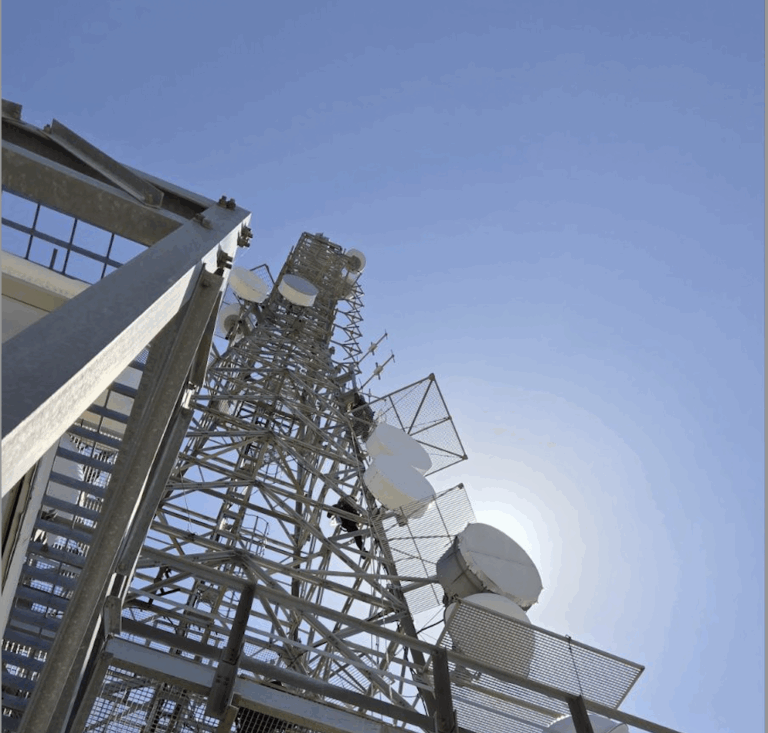
The new infrastructure is based on a wireless microwave connection through the Hymettus antenna park and was implemented with funding and technical support from GRNET, in collaboration with DIGEA, which generously provided access to its antenna infrastructure at the Hymettus facilities free of charge. With the operation of the new link, the ICCS facilities in Koropi are now integrated into GRNET’s extended node network, substantially strengthening the geographical and technological presence of the Greek national academic network in the Mesogeia region.
The infrastructure includes a 10 Gbps wireless connection between NTUA and Hymettus, complemented by an additional 1 Gbps backup connection, as well as a 1 Gbps connection between NTUA and Koropi, offering symmetrical upload and download speeds. These capabilities now ensure reliable, high-capacity access to the internet and research networks for the Koropi facilities, effectively resolving a long-standing connectivity challenge.
The significance of the project is multifaceted. For ICCS, the new connection was achieved without construction or operational cost, creating a modern and scalable communications infrastructure capable of supporting the Institute’s continuously growing research and technological activities.
At the same time, the project is also particularly important for GRNET, as the wireless link between NTUA and Hymettus is the first to support ultra-high-speed 10 Gbps connectivity. This new capability opens the way for the development of additional high-speed connections across other parts of the Athens metropolitan area and Mesogeia region, while also strengthening GRNET’s presence in Koropi, where its network footprint had previously been limited.
The successful completion of the project was made possible through the valuable contribution and close cooperation of all participating organizations. Special thanks are extended to the National Technical University of Athens and its Rector, Professor Ioannis Chatzigeorgiou, for their institutional support of the initiative, as well as to ICCS and its Director, Professor Ioannis Psarras, for their coordination and substantial support throughout the implementation process.
A particularly important contribution also came from the Dean of the School of Electrical and Computer Engineering of NTUA, Professor P. Tsanakas, who supported the initiative from the very beginning and played a key role in addressing the technical and administrative challenges that emerged during the design and implementation phases of the project.
Special thanks are also addressed to GRNET for the funding, technical support, and implementation of the new connection, as well as to DIGEA for generously granting access to its antenna infrastructure at the Hymettus antenna park, contributing decisively to the creation of a critical digital infrastructure with long-term impact for research, education, and innovation.
“The operation of this new link is a characteristic example of successful collaboration between public and technology stakeholders, demonstrating how the synergy between academia, national research networks, and private infrastructure providers can lead to the development of critical digital infrastructures with long-term impact for research, education, and innovation,” stated Angelos Amditis, R&D Director of ICCS/NTUA.