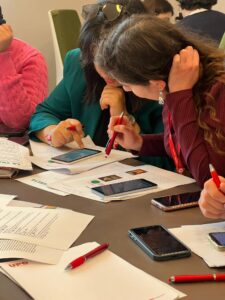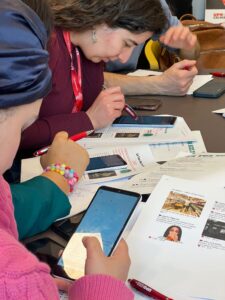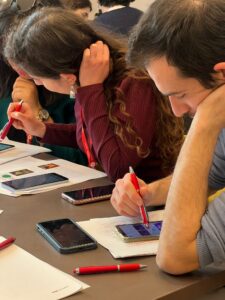
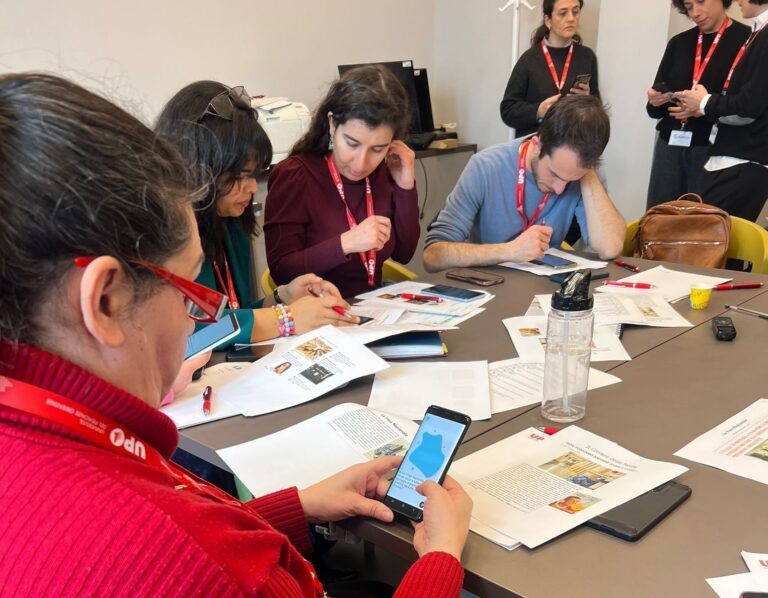
On 19 February 2026, the second Tabletop Exercise (TTE) of the PREPSHIELD project was successfully conducted in Piemonte, Italy, marking a key milestone in validating the project’s methodology and digital tools.
The PREPSHIELD project aims to foster a more holistic and citizen-centric approach to health crisis preparedness and management by co-creating policy recommendations, innovative methodologies, and an AI-powered crisis management platform. A core objective is to actively engage public authorities, citizens — particularly from vulnerable and non-compliant groups — civil society organizations (CSOs), disaster response organizations (DROs), and healthcare institutions to ensure that developed solutions reflect real societal and operational needs.
Through an iterative co-creation and evaluation process, PREPSHIELD develops recommendations for preparedness, crisis management, and risk communication, while also designing tools to simulate future health emergencies. These tools are tested through multiple pilot activities at different scales: local (Hamburg, Germany), regional (Piemonte, Italy), and national (Romania). A key component is the PREPSHIELD digital platform and mobile app — built on the proven CRIMSON platform — which reproduces realistic crisis communication conditions and provides decision-makers with simulations and feedback regarding stakeholder behaviour, wellbeing, capacities, and available resources. To date, 2 out of the 3 pilot actions (in the form of realistic exercises) have been completed. The project will continue testing its solutions through a series of online pilot activities.
The ISense/ICCS team played a central role in the Piemonte Tabletop Exercise by presenting and testing, under realistic simulation conditions, the mobile application we have developed to enhance health crisis preparedness and communication. The app enables secure self-reporting of health status, symptoms, and mobility patterns, integrates surveys and targeted demographic features, and delivers personalized recommendations. Importantly, its AI/ML backend analyses reporting behaviour patterns and validates information sources to mitigate risks of misinformation or database abuse.
The ISense/ICCS team played a significant role in the Piemonte pilot, presenting and testing under realistic simulation conditions the mobile application we are developing, which enhances preparedness and communication during health crises. The application, through secure registration mechanisms allows authorized organizations and users to submit legitimate educational and informational material, providing legitimate sources of information and minimizing misinformation; utilizes questionnaires and targeted demographic data; provides personalized recommendations; and integrates an AI/ML mechanism for provide personalize content to the users in order to contribute to citizen awareness and education during or after a health crisis.
During the Piemonte Tabletop Exercise, the mobile application functioned as a core information exchange tool between citizens and authorities, demonstrating its added value in supporting data-driven decision-making through advanced visualization tools. At the same time, strict adherence to privacy, data protection principles, and ethical standards was ensured. The project is implemented by a complementary consortium of five universities, two public authorities, one research and technology organization (RTO), two non-profit organizations, one SME, and two large enterprises from seven EU countries and Switzerland, ensuring strong interdisciplinary and cross-border collaboration.
The following I-SENSE researchers are working on this project:
Eirini Varia (UI/UX Designer), Konstantinos Stavrou (UI Front-End Developer), Giannis Mytis (Back-End Developer), Giovanna Bilali (Project Manager), Nadia Skepetari (Dissemination), Athanasios Douklias (CMSS Technical Coordinator), Lazaros Karagiannidis (Team Leader), Eleftherios Ouzounoglou (TMAT).
The project is run by the the Health Technologies (HT) and the Crisis Management and Secure Societies (CMSS) Division.