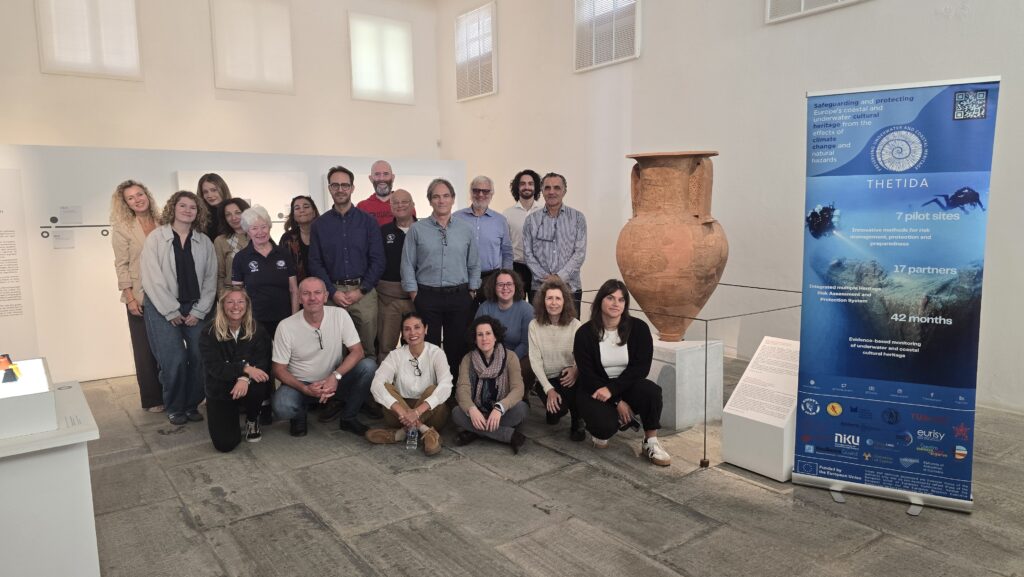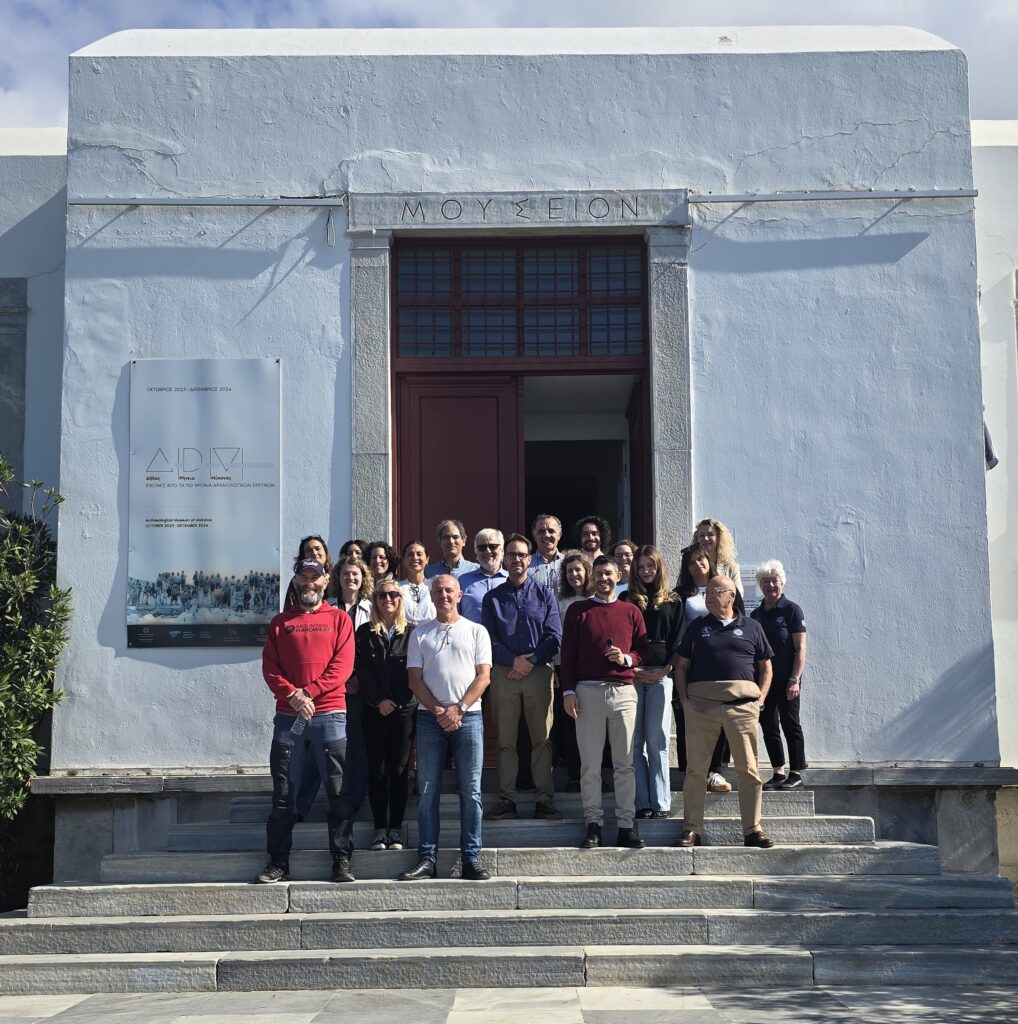
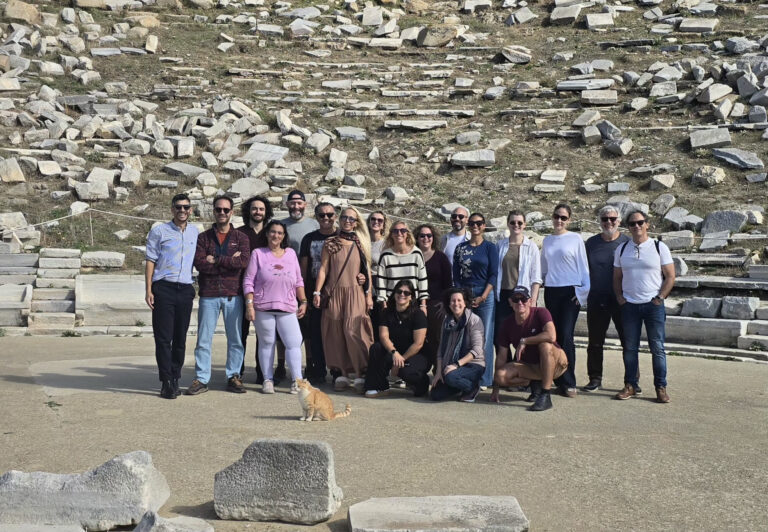
The Final Event of the European research project THETIDA – Technologies and methods for improved resilience and sustainable preservation of underwater and coastal cultural heritage took place on 30 October 2026, at the Archaeological Museum of Mykonos, Greece, marking the successful completion of 42 months of research, technological innovation and international collaboration.
Funded under the European Union’s Horizon Europe programme and coordinated by the Institute of Communication and Computer Systems (ICCS) of the National Technical University of Athens (NTUA), THETIDA aimed to strengthen the resilience and sustainable preservation of underwater and coastal cultural heritage against climate change and multiple natural and human-induced hazards.
From Research to Real-World Applications
The Final Event brought together project partners, researchers and cultural heritage experts to present THETIDA’s main scientific and technological achievements, including the outcomes of its pilot demonstrations and Living Labs across Europe. The programme highlighted innovative technologies for cultural heritage monitoring, risk assessment and protection, including smart buoys, autonomous underwater vehicles, advanced sensing technologies, satellite-based observations, climate and ocean modelling services, augmented reality applications and innovative material preservation techniques.Discussions also addressed policy recommendations, dissemination and exploitation activities, and opportunities to build upon the project’s achievements beyond its official completion.
A Lasting Legacy for Cultural Heritage Protection
Reflecting on the project’s achievements, Dr Angelos Amditis, THETIDA Project Coordinator and R&D Director at ICCS, stated:
“THETIDA has demonstrated that protecting our cultural heritage requires bringing together different scientific disciplines, advanced technologies and, above all, people working towards a shared vision. Over 42 months of collaboration, we have developed innovative solutions and established partnerships that can contribute to making underwater and coastal heritage more resilient to the challenges of climate change. The completion of THETIDA is not the end of this journey, but the starting point for further exploiting its results and building upon the knowledge and connections we have created.”
Beyond the scientific and technological achievements, the event celebrated the strong partnerships, shared experiences and collaborative spirit that characterised THETIDA throughout its implementation. As THETIDA reaches its conclusion, it leaves behind valuable scientific knowledge, technological advancements and a strong European network committed to the sustainable preservation of our shared underwater and coastal cultural heritage.