
A new article, rooted in a HIDDEN webinar co-organised by the I-SENSE Group of ICCS as project coordinator, argues that Social Sciences and Humanities are a strategic necessity for building trustworthy automated mobility.
When does a technology project truly serve the people it is meant to help, and when is it simply building “technology for technology’s sake”? That question runs through a newly published article from the EU-funded HIDDEN project, coordinated by ICCS and its I-SENSE Group, on why the Social Sciences and Humanities (SSH) have become indispensable to European transport research and innovation.
Titled “The Value of Including Social Sciences and Humanities (SSH) in EU-funded Innovation and Research: The HIDDEN project,” it brings together ten authors from the mobility, legal, behavioural, and policy communities, including HIDDEN Coordinator Dr Angelos Amditis (ICCS) and ICCS researcher-sociologist Pinelopi Alexiou. The article builds directly on HIDDEN’s webinar “From Principles to Practice: SSH in AI-Driven CCAM,” held online on 26 May 2026 and co-organised by the I-SENSE Group.
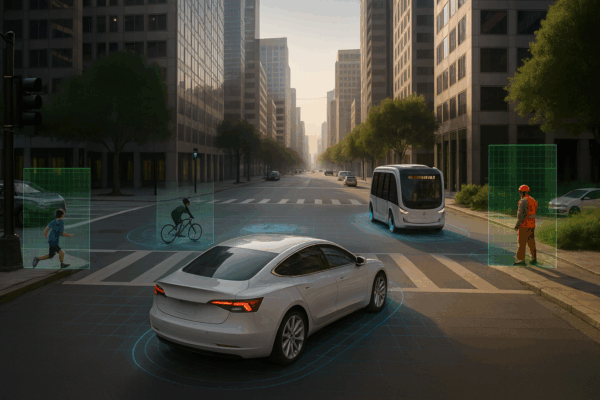
For HIDDEN, SSH is central rather than peripheral. The project develops advanced Collective Awareness and decision-making algorithms for safe, socially responsible autonomous mobility in complex urban settings, applying a “Hybrid Intelligence” approach that detects occluded objects and vulnerable road users (VRUs) and predicts their trajectories.
“CCAM risks excluding vulnerable groups and losing the public trust that any technology ultimately depends on — a challenge the HIDDEN project is tackling head-on by combining machine and human intelligence in the development of safer, more ethical automated mobility systems,” says Dr Angelos Amditis, HIDDEN Coordinator and R&D Director at ICCS.
The webinar experts, whose perspectives shape the article, each brought a distinct SSH lens: Dr İbrahim Öztürk (University of Leeds) on how trust and acceptance — not just technical faults — drive safety-critical failures; Pinelopi Alexiou (ICCS) on vulnerabilities that are social as well as physical, from digital literacy to gendered safety perceptions; Prof. Avv. Maria Cristina Gaeta (UNISOB) on how connected networks reshape liability under the EU Product Liability Directive; and Prof. Andreas Riener (TH Ingolstadt) on embedding SSH across the entire development lifecycle.
The message for policymakers and industry alike is clear: SSH deserves greater prominence in future EU funding calls, national strategies, and industrial innovation. Human-centred, ethical, and societal perspectives are not secondary considerations but key enablers of long-term adoption and public trust.
Read the full article on the HIDDEN project website here, and watch the webinar From Principles to Practice: SSH in AI-Driven CCAM on the HIDDEN YouTube channel.