The I-SENSE Group of ICCS actively participated in the RTR Conference 2026, held on 10–12 February in Brussels, one of Europe’s leading events for road transport research and innovation. Every year, RTR brings together projects funded under Horizon Europe and Horizon 2020, as well as representatives from the European Commission, industry and academia, to exchange results, align priorities and shape the future of smart, green and safe mobility. Participation in the event allows research outcomes to reach a wider audience, strengthens collaboration across initiatives and supports the transition from innovation to real-world deployment.
Building trustworthy CCAM: I-SENSE contributions at RTR 2026
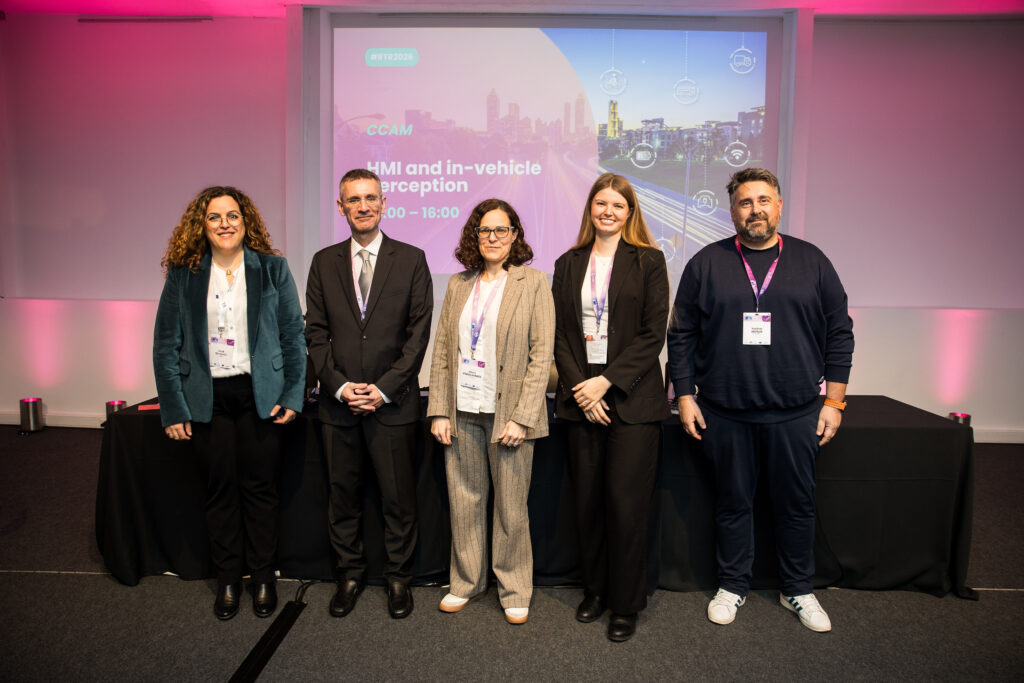
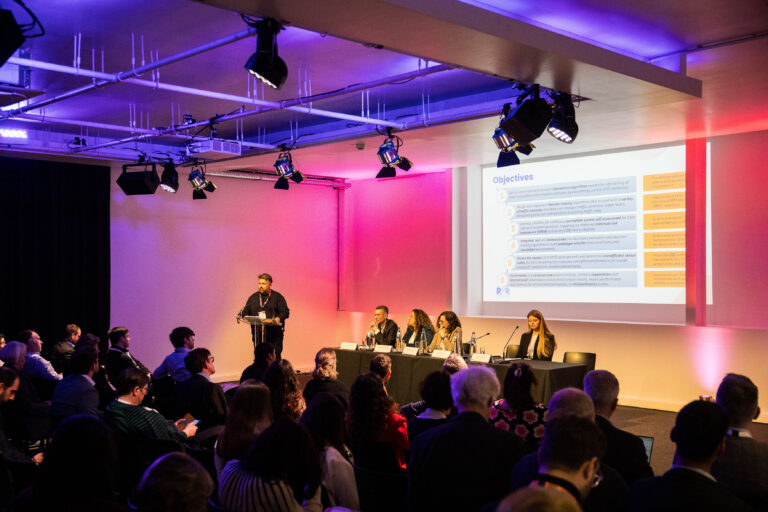
On the first day of RTR, Dr. Vasilis Sourlas, ITS Technical Management Advisor and CCAM Division leader at the I-SENSE Group of ICCS, took part as a speaker in the session “HMI In-Vehicle Perception,” representing the EVENTS project. Dr. Sourlas addressed one of the most persistent challenges in automated mobility: reliable perception in adverse weather conditions. By enhancing robustness and resilience under demanding environmental scenarios, the EVENTS project contributes to validated safety and security, while fostering secure and trustworthy interaction among road users. The session was moderated by Georgios Sarros from CINEA and Sarab Tay-Guyot from Valeo, and featured insights and results from three research initiatives: AWARE2ALL, EVENTS, and HEIDI.
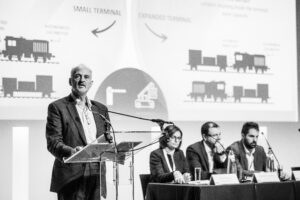
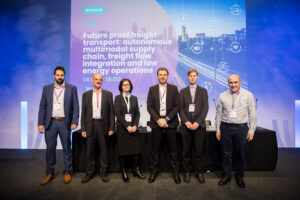
As coordinator of AutoMoTIF Project, Dr. Angelos Amditis, Research & Development Director of I-SENSEGroup/ICCS, presented the project during Session 19 on future-proof freight transport. Together with sister project AUTOSUP, ICCS contributed to a high-level discussion on how to accelerate automation in multimodal freight transport — not as a long-term vision, but as an immediate priority. Moderated by representatives from DG MOVE and ALICE, the session highlighted the importance of aligning policy, innovation, and deployment efforts. From ICCS’s perspective, RTR 2026 reaffirmed the role of coordinated European action in delivering scalable, low-energy, and automation-ready logistics solutions.
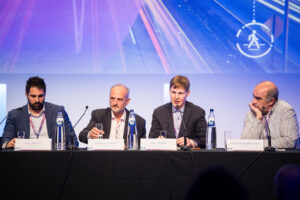
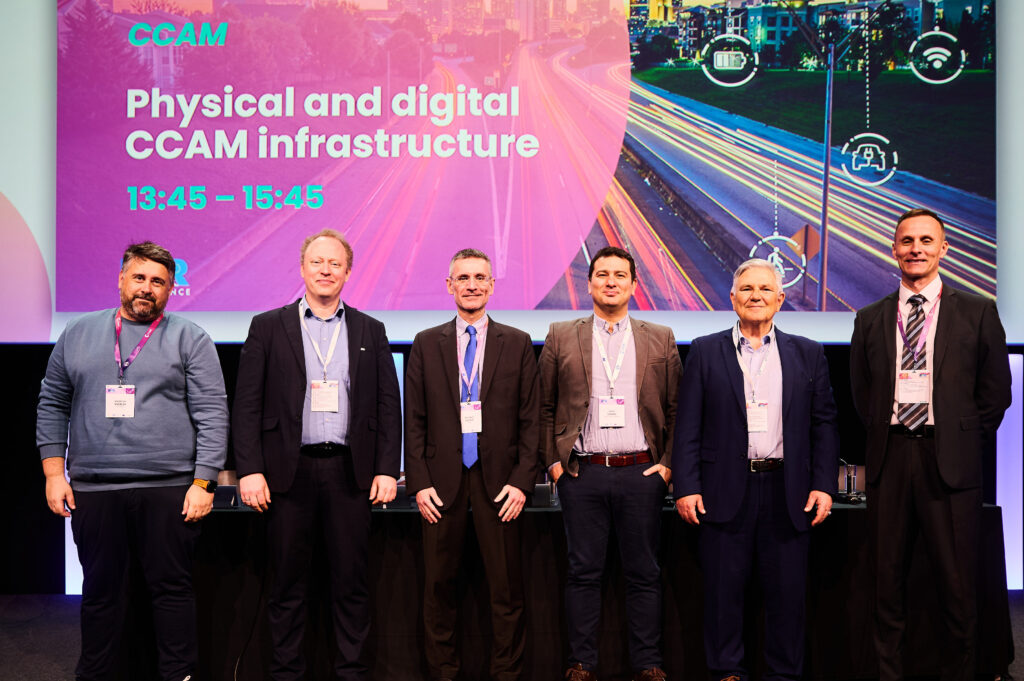
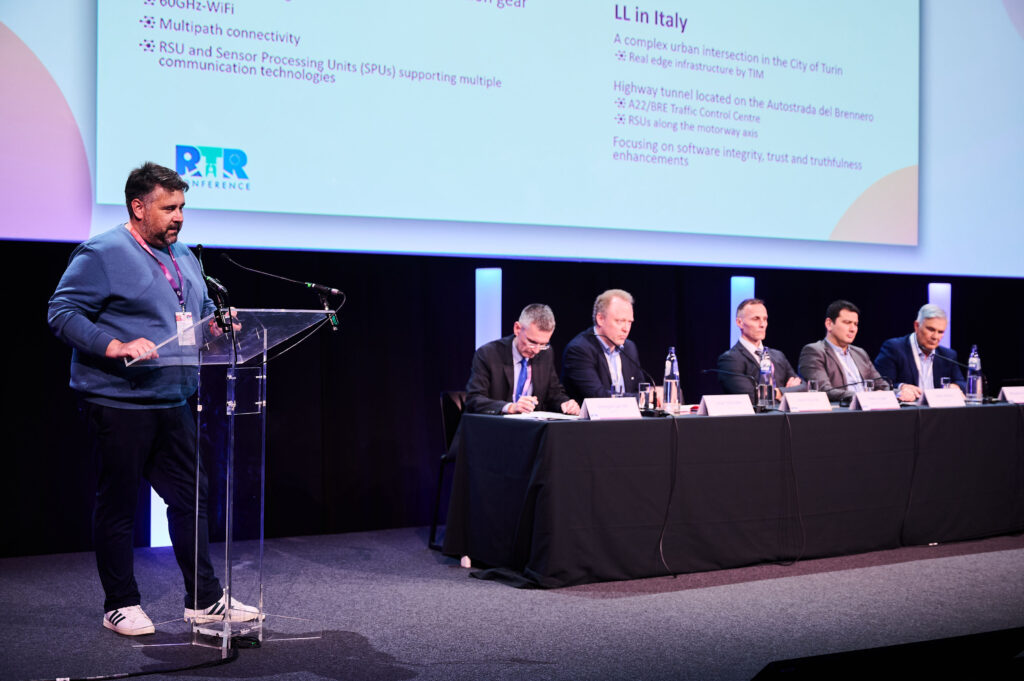
On the final day of the conference, 12 February 2026, our research group contributed to the session on “Physical and Digital CCAM Infrastructure”, moderated by Georgios Sarros, Project Officer at CINEA, and Julian Schindler (German Aerospace Center – DLR). During the session, Dr. Vasilis Sourlas, presented the latest results of the PoDIUM Project, highlighting the project’s scalable, high-level architecture developed by the consortium to enable reliable CCAM services across urban, highway and tunnel environments. The presentation also addressed the project’s techno-economic validation and its contributions to standardisation, demonstrating the feasibility and added value of the project outcomes in infrastructure-supported automation. The session took place alongside sister projects AUGMENTED CCAM, iEXODDUS and FRODDO and focused on key CCAM deployment challenges, including interoperability, infrastructure readiness, resilience, trust and the extension of Operational Design Domains (ODDs).
Federated Platforms for Smarter Enforcement and More Resilient, Sustainable Transport Operations
On day 1 of the conference, Giannis Kanellopoulos, Multimodal Logistics and Maritime Operations Division Leader at I-Sense, presented in the session “Smart enforcement for resilient, sustainable and more efficient transport operations”. The session brought together initiatives showing how enforcement, operations and planning can be strengthened when transport intelligence is connected across modes and stakeholders, turning fragmented data into actionable decisions for day-to-day mobility and logistics. In this context he presented the approach of DELPHI Project to passenger-and-freight intermodality; which through a federated network of platforms enables trusted data sharing and optimization across the transport chain. He showcased the project’s work on governance, architecture and data-driven optimization, and highlighted pilot outcomes demonstrating measurable benefits from improved congestion prediction to reductions in travel/delivery times, emissions and operating costs. Finally, he outlined DELPHI’s emerging recommendations and contributions to a wider multimodal traffic management roadmap.
In addition to the projects coordinated by our research team, the I-SENSE Group maintained a strong presence throughout the conference through a number of initiatives in which it plays a core and highly impactful role, contributing decisively to their technical achievements and key results, including SYNERGIES, SINFONICA, CAMBER, SUNRISE, IN2CCAM, AUTOMOTIF, Hi-Drive and CONNECT. This broad participation highlights the group’s continuous and substantial contribution to European research and innovation across CCAM, cooperative, connected and automated mobility, electromobility, logistics, inclusiveness, digitalisation and smart infrastructure.
Contribution to the SYNERGIES Workshop on Federated Data for CCAM
Prior to the conference, our team participated in the workshop “Federated Data and Scenario-based Validation for Safe and Trustworthy CCAM: The SYNERGIES Approach”, held on 9 February 2026 in the framework of the RTR conference. The session brought together key stakeholders to explore Europe’s vision for scenario-based validation and federated data spaces in CCAM, covering the regulatory landscape as well as the architecture and roadmap of the SYNERGIES platform. An interactive segment allowed participants to engage with use cases and provide feedback on the platform’s usability. From our research team, Dr. Vasilis Sourlas actively contributed to the discussions, supporting the exchange on federated data infrastructures and trustworthy validation frameworks for next-generation CCAM systems.
The recordings of the sessions are available at the following link: YouTube channel